
Persistent foot pain is not something you should have to live with. For millions of people, that daily ache is a constant struggle that limits mobility and reduces quality of life, often stemming from conditions like plantar fasciitis, arthritis, or simply the strain of being on your feet all day. While many factors contribute to this discomfort, a powerful solution lies in specialized footwear: orthopedic shoes. This comprehensive guide is designed to be your expert resource. We will explain what makes orthopedic shoes different, the key features that provide relief, how to choose the perfect pair for your needs, and answer your most common questions.
Quick Guide: Who Needs Orthopedic Shoes?
| If Your Goal Is… | Your Primary Need Is… | Look for These Key Features |
|---|---|---|
| All-Day Comfort | Reducing general foot fatigue and preventing future pain. | Excellent cushioning, good arch support, and a stable sole. |
| A Specific Condition | Alleviating pain from plantar fasciitis, bunions, or arthritis. | A wide toe box, firm heel counter, and targeted support. |
| Managing Diabetes | Protecting sensitive feet and preventing ulcers. | A seamless interior, extra depth, and a non-binding fit. |
What Are Orthopedic Shoes?
More Than Just Comfortable Shoes
Orthopedic shoes are meticulously engineered footwear designed to support the complex mechanics of your feet, ankles, and legs. Unlike standard shoes that prioritize style, orthopedic footwear is built from the ground up to alleviate foot pain, correct biomechanical imbalances, and accommodate various foot conditions. These shoes are frequently recommended by podiatrists for conditions such as plantar fasciitis, bunions, flat feet, high arches, and diabetes-related foot issues.
Orthopedic vs. Regular Shoes: The Key Differences
The superiority of orthopedic shoes comes from their specific, purpose-built design features:
- Enhanced Support Systems: Orthopedic shoes feature robust arch support, deep heel cups, and overall structural stability to maintain proper foot alignment.
- Generous Toe Box: A wider and deeper toe box is a hallmark feature, allowing your toes to spread naturally. This reduces pressure on bunions and hammertoes and prevents painful crowding.
- Customizable Fit: Most models come with removable insoles, allowing you to insert your own custom orthotics for a perfectly personalized fit.
- Built for Durability: Constructed from high-quality, durable materials, these shoes are designed to maintain their supportive integrity over years of wear.
The Core Benefits: Who Can Orthopedic Shoes Help?
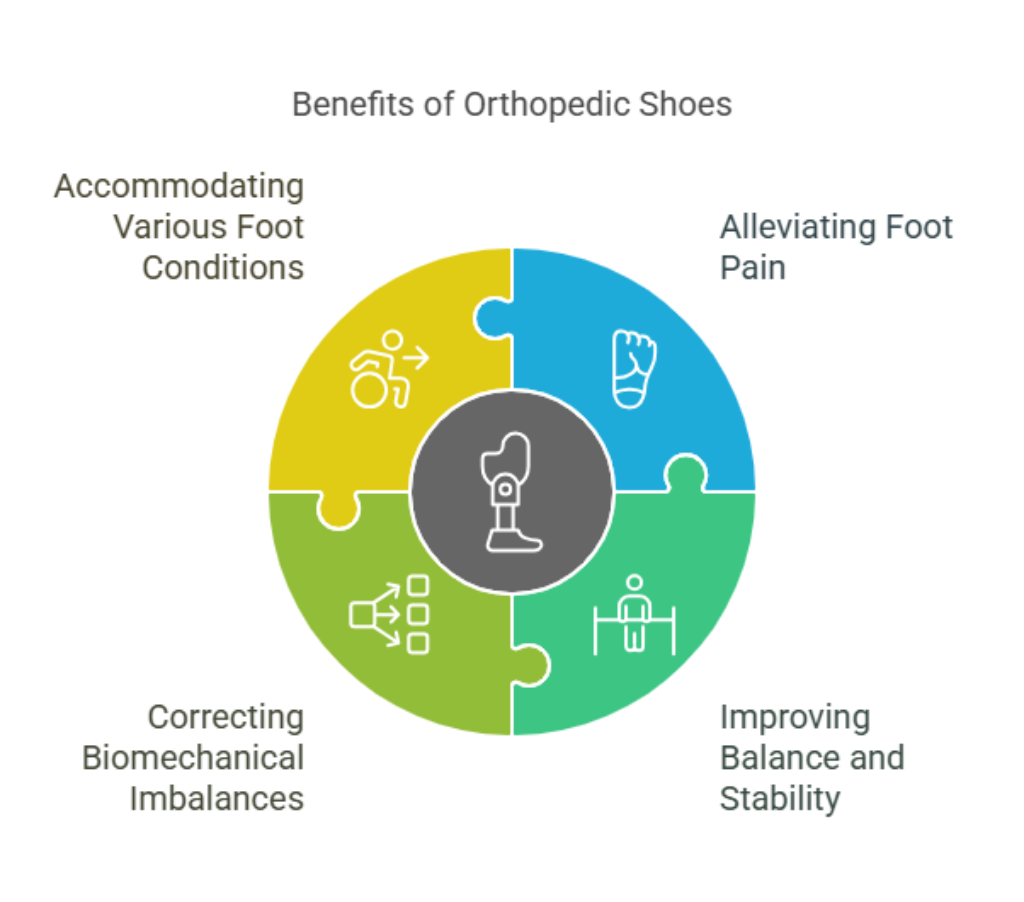
Orthopedic shoes provide substantial benefits for a wide range of individuals by addressing specific sources of pain and instability.
Targeted Relief for Common Conditions
- Plantar Fasciitis: Built-in arch support and superior heel cushioning reduce strain on the plantar fascia ligament, a key factor in alleviating this common cause of heel pain.
- Arthritis and Joint Pain: By providing a stable base and exceptional shock absorption, these shoes minimize stress on inflamed joints in the feet, ankles, and even knees, making movement less painful.
- Bunions and Hammertoes: A wide toe box provides ample space for the forefoot, reducing friction and pressure on painful bunions and hammertoes.
- Flat Feet and High Arches: Anatomically correct arch support helps correct the biomechanical imbalances associated with both flat feet (overpronation) and high arches, leading to greater comfort and improved posture.An Invaluable Investment in Your HealthFor anyone dealing with chronic foot pain or a diagnosed condition, orthopedic shoes are an invaluable investment. By reducing pain, enhancing mobility, and preventing future complications, they offer long-term value that extends far beyond simple comfort. The potential to avoid more serious health issues makes them a wise choice for your overall well-being.
The Anatomy of an Orthopedic Shoe: 5 Key Features
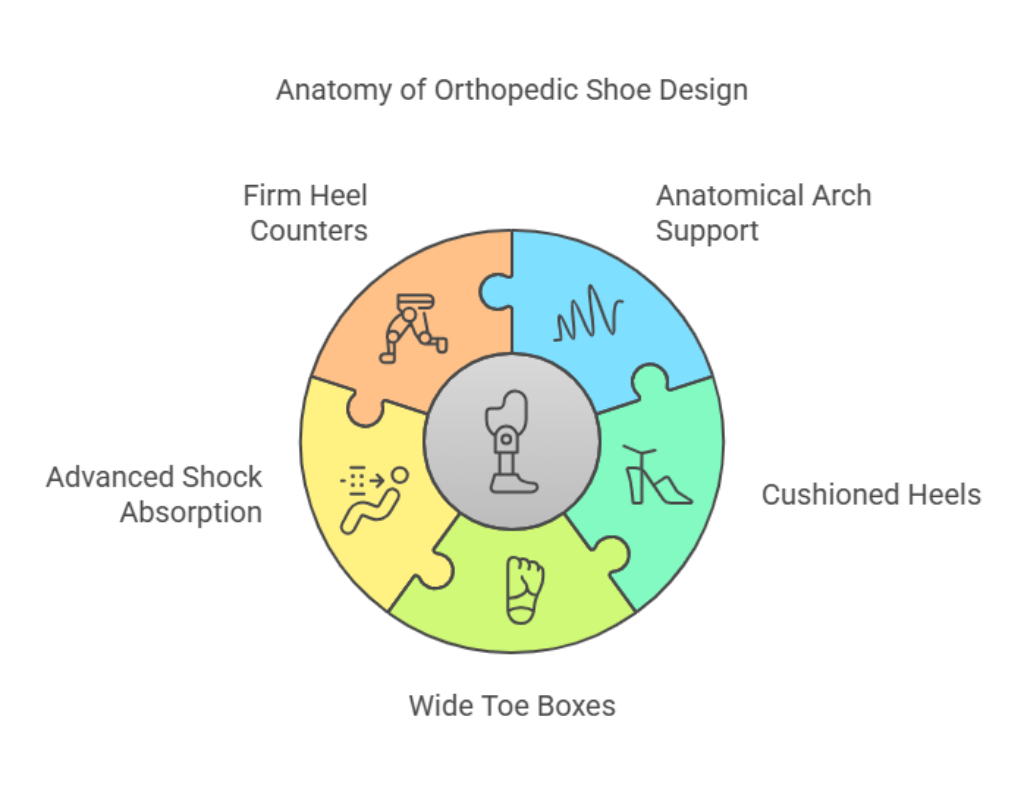
Orthopedic shoes are engineered with specific design elements that work together to provide therapeutic benefits. Understanding these core characteristics will help you identify a high-quality shoe that offers genuine support.
- Anatomically Contoured Arch Support:Precisely shaped arch support is a cornerstone of orthopedic design. This critical feature provides anatomically correct support to the foot’s arch. It plays a vital role in:
- Evenly distributing body weight across the foot
- Reducing strain on the plantar fascia ligament
- Alleviating pain linked to conditions like flat feet and plantar fasciitis.
- Cushioned Heels for Shock Absorption:Specialized heel cushioning is another key element. Materials engineered for shock absorption are strategically incorporated into the heel. This cushioning acts as a buffer, minimizing impact forces on your:
- Heel bone itself (calcaneus)
- Ankles, knees, and hips.
- Providing relief from heel pain, especially for conditions like heel spurs or arthritis.
- Roomy and Foot-Friendly Wide Toe Boxes: Unlike conventional shoes with tapered toe boxes, orthopedic shoes prioritize toe comfort. They feature wider toe boxes that offer ample space. This generous space allows toes to spread naturally without compression. This wider design helps to prevent:
- Painful crowding and rubbing of toes
- Discomfort and pressure on bunions and hammertoes.
- Promoting healthier, more natural toe alignment.
- Advanced Shock Absorption Throughout: Orthopedic shoes go beyond just heel cushioning. Manufacturers utilize advanced materials and innovative construction throughout the shoe. This holistic approach ensures superior shock absorption with each step. This broader shock-absorbing capacity reduces overall stress and impact transmitted to:
- Your entire feet
- Joints throughout the lower body. This feature is particularly advantageous for those with arthritis, general joint pain, or active individuals engaging in higher-impact activities.
- Stabilizing Firm Heel Counters: Heel counters, the stiff component surrounding the heel cup of the shoe, play a critical role in stability. Orthopedic shoes incorporate firm heel counters. These provide essential control and stabilization to the rearfoot (heel region), limiting excessive:
- Pronation (inward rolling of the foot and ankle)
- Supination (outward rolling). This motion control promotes a more stable gait and can reduce the risk of ankle sprains and other injuries.
The Tradeoffs: 4 Considerations Before You Buy
While orthopedic shoes offer immense benefits, it’s important to have a balanced perspective. Understanding these common considerations will help you make a fully informed decision.
- The Higher Initial Cost. Orthopedic shoes typically have a higher price tag than conventional footwear. This cost reflects the specialized design, advanced materials, and higher-quality construction required for a therapeutic shoe. It is best to view this not as an expense, but as an investment in your long-term health and comfort.
- Style and Aesthetic Limitations. While the industry has made massive improvements, the primary focus of orthopedic shoes is still function over fashion. Finding a style that perfectly matches your personal aesthetic can sometimes be a challenge, although the variety of modern and stylish options is growing every year.
- The Importance of a Perfect Fit. With therapeutic footwear, a proper fit isn’t just about comfort—it’s essential for the shoe to work correctly. Sizing can sometimes differ from standard shoes, and you may need to take careful measurements or seek a professional fitting to ensure you get the full benefit.
- A Brief Adjustment Period. For someone used to non-supportive footwear, the enhanced support and altered biomechanics of an orthopedic shoe can feel different at first. Expect a brief adjustment period of a few days as your feet and muscles adapt to a healthier alignment. This initial strangeness is temporary and a sign that the shoe is doing its job.
Orthopedic Shoes vs. Orthotics: What’s the Difference?
While both are designed to improve foot health, they serve different functions.
- Orthotics are specialized shoe inserts—not the shoes themselves. They are placed inside your existing footwear to provide targeted cushioning and correct biomechanical imbalances. They can be purchased over-the-counter or be custom-made by a podiatrist.
- Orthopedic Shoes are complete footwear solutions with all the supportive features (arch support, wide toe box, firm sole) built directly into their core design. For mild discomfort, over-the-counter orthotics can be a good starting point. For more significant conditions, a podiatrist may recommend a comprehensive orthopedic shoe or even a combination of custom orthotics placed inside an orthopedic shoe for maximum support.
Comparing Therapeutic Footwear: Orthopedic, Diabetic, and Arthritic Shoes
The realm of therapeutic footwear includes several specialized categories designed to protect and support feet. While orthopedic, diabetic, and arthritic shoes share the overarching goal of promoting foot health, they are engineered with distinct features and target different needs:
| Feature | Orthopedic Shoes | Diabetic Shoes | Arthritic Shoes |
|---|---|---|---|
| Primary Goal | Comprehensive structural support and alignment | Ulcer prevention, pressure reduction, neuropathy accommodation | Maximize joint comfort, ease of motion, minimize friction |
| Support Focus | Robust arch support, heel stabilization, overall foot alignment | Minimal pressure, extra depth, protective materials | Cushioned insoles and linings, flexible uppers |
| Key Features | Wider toe box, firm sole, customizable insoles, durable build | Seamless interior, protective toe box, extra depth, adjustable closures | Rocker soles (optional), easy closures (Velcro/zippers), soft, accommodating uppers |
| Target Conditions | Plantar fasciitis, bunions, flat feet, high arches, general foot pain | Diabetes, neuropathy, foot deformities, history of foot ulcers | Osteoarthritis, rheumatoid arthritis, joint stiffness and pain, sensitive feet |
How to Choose the Right Orthopedic Shoes: A 5-Step Guide

Choosing the best orthopedic shoes means finding the perfect balance between therapeutic function and your personal lifestyle. Follow these steps to make a confident choice.
- Identify Your Primary Need
Start by defining your goal. Are you looking to alleviate pain from a specific condition like plantar fasciitis? Do you need protective footwear for diabetes management? Or are you seeking to prevent fatigue from standing all day? Your primary need will determine which features are most critical.
- Focus on Essential Features
Based on your need, prioritize the core design elements. For arch-related pain, focus on anatomically contoured arch support. For bunions, a wide and deep toe box is non-negotiable. For general stability, look for a firm heel counter and a supportive sole.
- Ensure the Perfect Fit
A proper fit is essential for a therapeutic shoe to work correctly. Always measure both of your feet, and it’s best to shop later in the day when they are slightly swollen. There should be about a half-inch of space between your longest toe and the end of the shoe, and it should feel comfortable immediately.
- Consider Your Lifestyle and Activities
Select a style that matches your daily life. For active use, choose orthopedic athletic shoes with enhanced cushioning. For professional settings, look for sleek dress orthopedic shoes. For casual or warm-weather use, consider orthopedic sandals and slippers that still provide necessary support.
- Consult a Professional (If Needed)
If you have a diagnosed medical condition, chronic pain, or are unsure where to start, consult with a podiatrist or orthopedic specialist. They can provide an expert diagnosis and recommend the specific type of shoe and support you need for your condition.
Recent Innovations in Orthopedic Shoes
The field of orthopedic footwear is constantly evolving, with technology playing an increasingly important role in improving design, customization, and overall effectiveness:
- 3D Printing: This revolutionary technology allows for the creation of highly customized orthotics and even entire shoe designs based on precise scans of an individual’s foot. This enables unparalleled personalization and fit.
- Augmented Reality (AR): AR applications are transforming the shoe-shopping experience. They enable virtual try-ons, allowing customers to visualize how different shoes will look and fit on their feet without physically trying them on. This enhances both online and in-store shopping.
- Industry 4.0: The principles of Industry 4.0 are optimizing manufacturing processes in the footwear industry, including automation, data exchange, and interconnected systems. This leads to greater efficiency, reduced waste, and the ability to produce more customized and responsive designs.
- Smart shoes: These innovative shoes incorporate sensors and data analysis to provide personalized feedback on gait, pressure distribution, and other biomechanical factors. This information can be used to fine-tune orthotic prescriptions, optimize shoe design, and even monitor rehabilitation progress.
Frequently Asked Questions About Orthopedic Shoes
Yes, for a significant number of individuals, they provide substantial relief. By offering superior arch support, cushioning, and proper alignment, they directly address the biomechanical issues that cause common types of foot pain, especially from conditions like plantar fasciitis and flat feet.
While both are therapeutic, orthopedic shoes focus on structural support and alignment. Diabetic shoes are a specialized subset that prioritizes protection, featuring a seamless, soft interior and extra depth to prevent skin irritation, blisters, and ulcers for sensitive feet.
This is a common myth. People of all ages, from athletes seeking to prevent injury to professionals who are on their feet all day, can benefit from the superior support and comfort of orthopedic shoes. They are designed for function, not a specific age group.
Yes, most high-quality orthopedic shoes are designed with this in mind. They feature removable insoles that can be easily taken out to accommodate your own custom or specialized orthotics, allowing for a perfectly personalized fit.
Not anymore! While function is still the top priority, the industry has made huge strides in design. Today, you can find a wide variety of stylish orthopedic dress shoes, sandals, and athletic shoes that blend modern aesthetics with therapeutic benefits.
Conclusion: Taking the First Step to Better Foot Health
Orthopedic shoes are a powerful and effective solution for anyone seeking to alleviate foot pain, improve mobility, and invest in their long-term health. By understanding their key features and how to choose a pair that fits your specific needs, you can make an informed decision that leads to a more comfortable and active life. Ready to find the relief you’ve been looking for? Explore Dealibrium’s curated deals on top-rated orthopedic shoes and take the first step toward pain-free comfort today.
