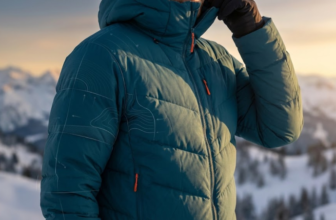
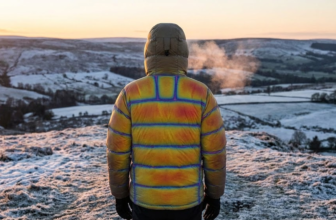
Most buyers hear “down is warmer, synthetics work when wet” and stop there. That half-truth leads to bad purchases: swampy synthetic parkas in dry alpine cold, or soaked-down jackets in swampy duck blinds. The real science shows clear win conditions for each—if you know how CLO, moisture, and construction interact.
This guide turns lab results on down, polyester insulation, and extreme‑cold clothing into simple rules you can actually shop with.
Warmth-to-weight: why down is still king
Down is structurally different from synthetic fibers. Each cluster forms a three‑dimensional network that traps large volumes of still air for very little mass, which is why proper down consistently ranks as the best thermal insulator among common apparel fibers.
- A quantitative insulation model that compared fibers by thermal conductivity, air content, and structure found down feathers at the top, followed by polyester and cotton with similar, lower performance.
- Composite studies where down was encapsulated in different fabrics also confirmed very high thermal resistance at relatively low mass and thickness.
In practical terms, for a given warmth (CLO), a down jacket will almost always be lighter and more compressible than a synthetic jacket.
Pro Tip: If you care about packability and weight—backpacking, ski touring, travel—down is your starting point. You only switch away from it when moisture or abuse risk becomes unacceptable.
💰Save More with Our Discounts & Coupons!


Why synthetics survive what kills down
Down’s superpower—loft—is also its Achilles heel. Wet down collapses, losing the air pockets that provide insulation. Synthetic battings, typically made from polyester, hold their structure better when damp or compressed.
Key lab findings:
- The fiber‑insulation model that compared down, polyester, and cotton showed polyester’s thermal performance sits behind down but significantly ahead of cotton, especially when accounting for humidity and structural stability.
- Tests on nonwoven polyester thermal mats show they maintain insulation and moisture management even at high humidity, with good acoustic and thermal properties under wet conditions.
So while down wins in dry loft per gram, synthetics win in forgiveness: they keep a usable percentage of their insulation even when wet, dirty, or repeatedly compressed.
Pro Tip: If your insulation will be rained on, sat on, or stuffed wet into a bag repeatedly, synthetics are the safer bet—even if they’re technically less warm on paper.
Clo, not marketing, is what keeps you warm
“Warmth” is not a feeling; it’s a measurable value. CLO is the unit for clothing insulation: 1 clo is roughly the insulation needed to keep a resting person comfortable at about 21 °C in a normally ventilated room. Field and lab studies on clothing ensembles show:
- Total outfit insulation—not just the jacket’s fill material—determines thermal comfort.
- High‑loft down ensembles can deliver high clo values at very low weight, but those clo values can collapse with wind and moisture.
Synthetics often target moderate clo at higher weight but maintain a more stable insulation level across changing humidity and usage scenarios.
For real-world buying, this means:
- Use down to hit high clo with low grams where conditions are controlled or dry.
- Use synthetics to hit “good enough” clo that doesn’t suddenly fail when things get wet, dirty, or windy.
What happens in extreme cold and wind
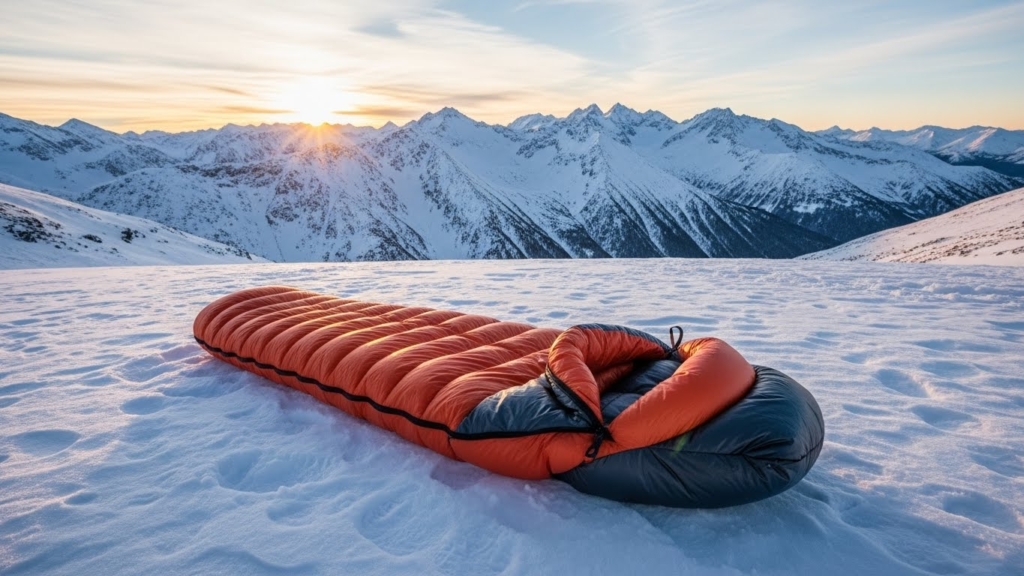
Extreme cold research on multi‑layer protective clothing shows that wind is often more dangerous than low air temperature.
- In controlled tests on cold‑weather clothing systems, increasing wind speed from 0 to 16 km/h caused assemblies to lose about 85% of their thermal insulation, regardless of the specific fill.
- This means any high‑loft system—especially down—must be protected by a good shell to maintain its theoretical insulation.
Down and synthetic both suffer under wind if exposed, but synthetics are usually paired with denser, less air‑permeable shells in workwear and military gear, which helps reduce convective losses.
Pro Tip: In real wind, the question is less “down vs synthetic” and more “does this jacket have a real wind‑stopping shell?” If not, expect up to 80% of your insulation to vanish in strong gusts, no matter the fill.
Moisture: the real tie-breaker
The main argument for synthetics is moisture tolerance, and the insulation modeling backs this up.
- As humidity rises, the effective insulation of many fiber fills changes; the analytic hierarchy process model used to evaluate polyester and down incorporated humidity and permeability as critical variables.
- Down’s structure is highly sensitive to liquid water; once clusters stick together, air pockets are lost and so is insulation.
- Polyester battings in nonwovens and air-laid structures maintain both thermal and moisture performance at high humidity, making them suitable for wet or sweat-heavy environments.
In practice:
- Down excels in cold, dry, or controlled moisture conditions.
- Synthetics excel where condensation, rain, splash, or ground moisture are part of every trip.
Dealibrium Take: Down vs synthetic in the real world

Here is how the lab science translates into practical jacket decisions.
Thermal performance matrix: down vs synthetic
Dealibrium Take:
- Choose down when weight, packability, and dry‑cold performance are your top priorities.
- Choose synthetics when failure (getting wet and cold) isn’t acceptable—wet forests, marshes, mixed rain/snow, or when you can’t baby your gear.
💰Save More with Our Discounts & Coupons!
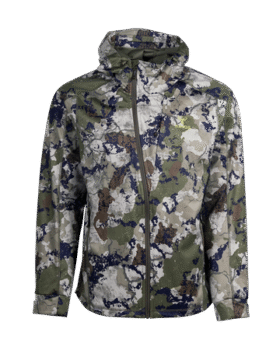
Use-case rules: when each insulation truly wins
Cold, dry, and predictable (alpine hunting, ski touring, winter backpacking)
- Best choice: High‑quality down (mid to high fill power) with a protective shell.
- Why: You can manage moisture with a waterproof shell and good layering; in return you get maximum warmth for minimum carry weight.
Wet, messy, and ground-contact heavy (duck hunting, marsh work, fishing from banks)
- Best choice: Synthetic-insulated jacket or parka.
- Why: Splash, spray, mist, and sitting on wet ground are routine. Synthetics keep enough insulation when soaked or compressed to stay safe and functional.
Mixed-use everyday winter (commuting, short hikes, errands in snow/rain)
- Best choice: Either mid‑range down with good shell or synthetic, depending on budget and care level.
- Why: If you’ll maintain and protect the jacket, down gives lighter comfort. If you’ll shove it in lockers and car trunks and wear it in slush, synthetics are less fragile.
Workwear and abuse (construction, guiding, repeated kneeling/sitting)

- Best choice: Synthetic or hybrid systems.
- Why: Repeated compression and dirt/oil exposure gradually degrade down’s loft; synthetics and composite nonwovens keep more of their insulation under this kind of punishment.
Pro Tip: Think in terms of “failure mode”. If getting cold because your jacket wet out would be dangerous or ruin the trip, synthetics are the conservative choice—even if they’re technically less efficient.
Frequently Asked Questions
Per gram in dry conditions, yes: research ranking fiber insulation shows down outperforming polyester and cotton on thermal performance. But a heavier synthetic jacket can match or exceed the warmth of a very light down piece if it simply uses more total insulation.
It keeps more of its warmth than down when wet. Polyester structures maintain loft and insulation under high humidity and moisture exposure better than down, which collapses when saturated.
Wind can strip away up to 85% of an ensemble’s thermal insulation if the shell isn’t windproof, especially in high-loft systems. This affects down noticeably because its advantage relies on stable, still air pockets.
Technically, yes, but you’ll carry more weight and bulk for the same warmth. Synthetic systems are safer in wet or unpredictable conditions, but serious alpine users often choose down plus a reliable shell to balance weight and protection.
If your trips are mostly cold and dry, prioritize down + good shell. If your reality is wet, muddy, and hard on gear, pick synthetic insulation and size up your budget for a robust outer fabric.
Key Takeaways: Stop Asking “Which Is Better?” and Ask “Better For What?”
The science is clear: down delivers unmatched warmth‑to‑weight in dry, controlled conditions, while synthetics deliver resilient, “good enough” warmth in wet, abusive, or uncertain conditions. No serious lab study crowns a universal winner; they rank fibers by scenario.
For buying decisions:
- Start with your worst likely condition, not your average.
- If that worst case is cold and dry → lean down.
- If that worst case is cold and wet or physically abusive → lean synthetic.
- Layering and shell choice often matter more than the fill label on the hangtag.
The smartest move is not picking a side but building a system: a reliable synthetic piece for wet, ugly days, and a well‑designed down piece for dry cold. That combination covers almost every hunt, hike, and winter commute you’ll ever face.