Most buying guides present soft and hard shells as a simple trade-off: soft shells are breathable but leak; hard shells are waterproof but stiff. The truth is more strategic. Research on mountaineering outerwear in extreme conditions shows that the “best” choice depends entirely on your activity type and how much failure you can tolerate.
This guide decodes the real performance differences using lab data on comfort properties, breathability, and thermal performance—so you buy based on physics, not marketing.
The fundamental difference: what each shell actually does
Hard shells use laminated or heavily coated membranes (like Gore-Tex or similar technologies) to block water completely while allowing some vapor transfer. The membrane itself has microscopic pores too small for liquid water but large enough for water vapor molecules. The result: maximum waterproofing, moderate breathability, and fabric stiffness.
Soft shells use lighter coatings, brushed linings (like tricot), and stretch fabrics that prioritize mobility and moderate water resistance over absolute waterproofing. They shed rain but don’t block saturation—they assume you’ll manage moisture through ventilation and layering, not a perfect seal.
The key insight: hard shells say “no water gets in.” Soft shells say “enough gets in, but you can vent it faster than it saturates.”
Pro Tip: Hard shell failures are catastrophic (sudden, complete saturation). Soft shell failures are gradual (slow moisture buildup). Choose based on what kind of failure you can tolerate—not the one with the better name.
💰Save More with Our Discounts & Coupons!
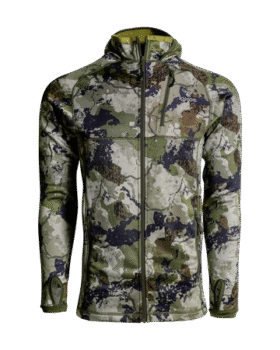

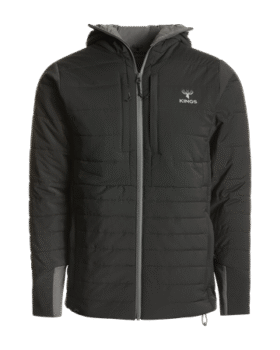
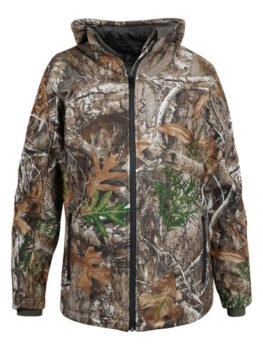
Hard shells: maximum waterproofing, minimum mobility
Hard shell jackets use multi-layer laminated fabrics with thin membranes bonded to outer and inner layers. Lab testing on these fabrics shows they achieve exceptional water repellency and water penetration resistance, especially when treated with hydrophilic (water-attracting) finishes.
Advantages:
- True waterproofing: Water column resistance often exceeds 20,000mm, providing genuine protection in heavy rain and snow.
- Durability: Laminated systems maintain functionality for years if cared for properly.
- Wind resistance: Dense membranes block wind effectively, reducing convective heat loss.
- Simplicity: You don’t have to think about moisture management—the jacket handles it.
Disadvantages:
- Stiffness: The laminated membrane reduces fabric stretch, limiting arm movement.
- Condensation risk: If you generate sweat and don’t ventilate actively, moisture can accumulate inside, making you feel “wet inside even though the jacket isn’t leaking.”
- Breathability vs. waterproofing trade-off: To maximize waterproofing, manufacturers often sacrifice vapor transmission, which means less comfortable wear during high-exertion activities.
Real-world scenario: You’re in a tree stand 6 hours in heavy rain. A hard shell keeps you completely dry. You don’t move much, so condensation isn’t a problem. You win.
Who should buy hard shells: Hunters in fixed positions, climbers expecting extended wet conditions, mountaineers in technical terrain, anyone prioritizing staying completely dry over mobility.
Soft shells: mobility and breathability, managed water tolerance

Soft shells use thinner coatings or brushed linings without the laminated membrane structure. Research comparing soft shell and hard shell outerwear in extreme cold, wet, and windy conditions shows that soft shells excel at rapid moisture management during active movement.
Advantages:
- Maximum mobility: Stretch fabrics and lighter coatings let you move naturally, which matters for climbing, drawing a bow, or precise footwork.
- Superior breathability: Without the laminated barrier, water vapor escapes faster, reducing internal condensation during active use.
- Tactile feedback: You feel what you’re doing (rock texture, equipment, body position) rather than moving inside a plastic shell.
- Weight and packability: Lighter overall, taking up less pack space.
Disadvantages:
- Limited waterproofing: Water column resistance typically 5,000-10,000mm—adequate for rain but not heavy downpour or snow pressure.
- Requires active layering: You need a breathable base layer to wick sweat and a system to ventilate moisture; the soft shell doesn’t do this alone.
- Slower drying: Once wet, soft shell fabrics retain water longer because there’s no barrier to prevent absorption.
Real-world scenario: You’re bowhunting and need to move quietly and precisely. A soft shell lets you position your arms freely, feel the bow draw, and move without noise. Light rain you can tolerate; all-day downpour would be a problem.
Who should buy soft shells: Bowhunters, climbers, fast alpinists, anyone whose activity demands freedom of movement, users of moderate-climate regions where rain is common but not extreme.
Comfort in extreme conditions: what the research actually shows
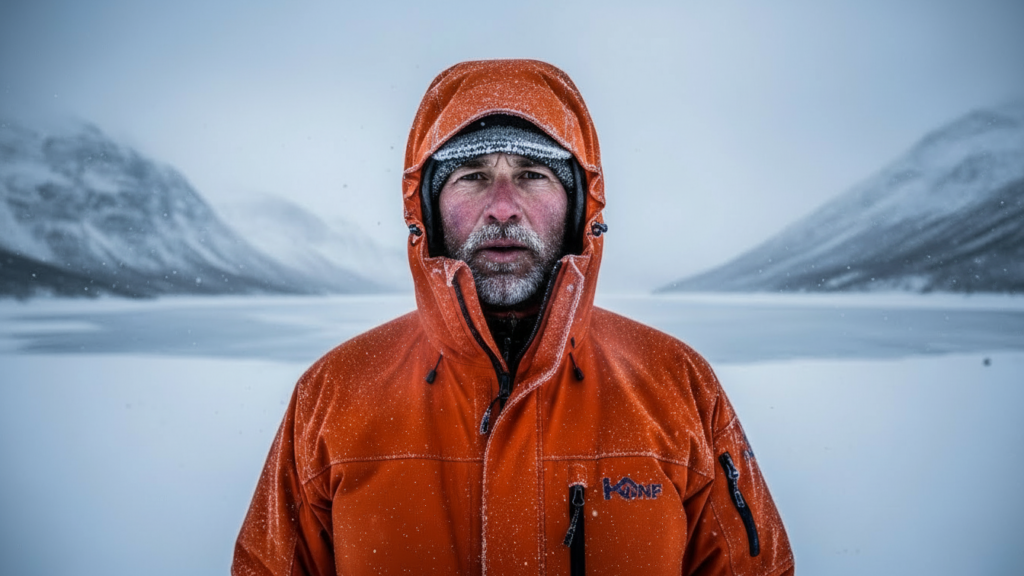
The most relevant study compared hard shells (hydrophobic/HPO membranes) and soft shells (hydrophilic/HPI membranes) in extreme conditions: 5°C, 50% humidity, 150mm/hour rainfall, and 3 m/s wind speed.
Key findings:
- HPI (soft-shell-like) was initially colder but warmed up after 10 minutes of activity and had noticeably less sweat condensation inside.
- HPO (hard-shell-like) started warmer but accumulated more moisture, resulting in higher condensation weight (21.2g vs. 17.7g).
- By the mid-point of the trial, HPI showed higher thermal comfort because less internal dampness meant better insulation.
- Subjective perception of dryness was 0.5 grade higher (drier feeling) with soft shell construction during active movement.
Translation: In extreme conditions with active movement, soft shells actually keep you more comfortable because they manage moisture better. Hard shells feel wetter inside even though they’re technically more waterproof.
This challenges the conventional wisdom. Hard shell waterproofing doesn’t equal hard shell comfort in active conditions.
Pro Tip: If you’re moving (hiking, hunting, climbing), a soft shell often feels drier inside because moisture escapes faster. If you’re static (sitting in a tree stand, belayed on a ledge), a hard shell keeps you drier overall. Choose based on what you’re actually doing, not the rating system.
💰Save More with Our Discounts & Coupons!
Breathability and water vapor permeability: where soft wins decisively
Hard shell fabrics prioritize waterproofing, which means lower water vapor permeability (breathability) to maintain a tight seal. Soft shell fabrics sacrifice some waterproofing to allow more vapor transfer.
Lab testing on coated and laminated fabrics shows that high water vapor permeability in outdoor fabrics requires lower fabric density and weave tightness, which conflicts with maximum waterproofing. In other words, you can’t have both at maximum levels.
Practical numbers from fabric research:
- Premium hard shell laminate: ~10,000 g/m²/24h water vapor permeability (high for hard shell)
- Good soft shell with brushed tricot: ~12,000+ g/m²/24h (more vapor escapes)
During active use (hiking, bowhunting), this difference means your soft shell evacuates sweat faster, keeping you more comfortable even if it’s slightly wetter from the outside.
The hunting-specific case: why bowhunters often choose soft shells
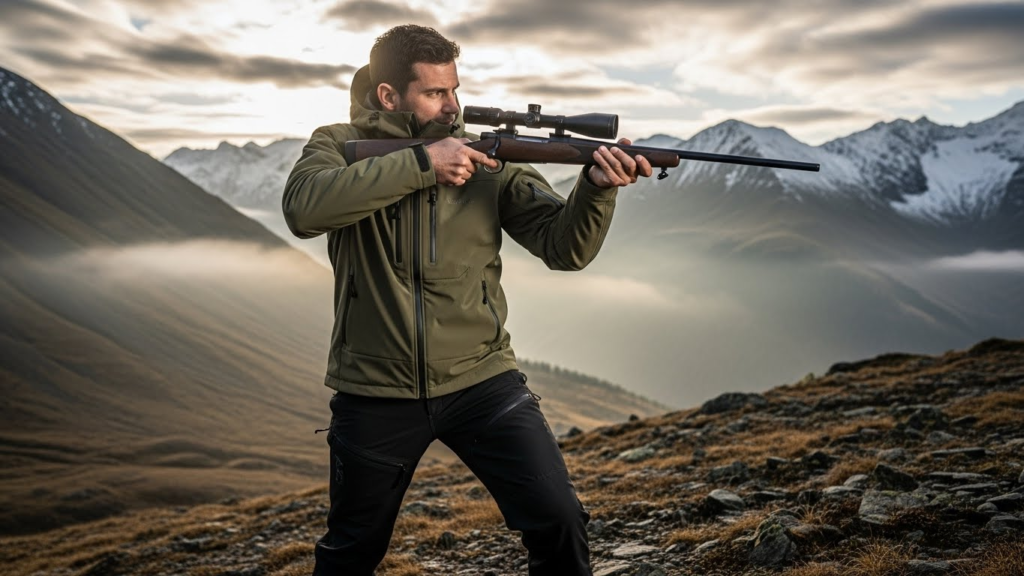
Bowhunters face a unique problem: precision draw and quiet movement require unrestricted shoulder mobility, but sitting still generates condensation inside any jacket.
The solution? Soft shell allows the draw; brushed tricot lining wicks sweat; waterproof shell is paired as a layered system for true downpours.
For bowhunting:
- Soft shell as primary layer (for mobility and breathability)
- Hard shell or rain parka as backup (for extreme weather, worn over the soft shell)
This two-layer system beats wearing a stiff hard shell for 6 hours straight, where condensation inevitably builds up.
Dealibrium Take: Soft vs. Hard Shell decision matrix
Here’s how the research translates into practical jacket selection:
Dealibrium Take:
- Hard shell if: Stationary hunting/mountaineering, extended rain/snow exposure, maximum waterproofing required.
- Soft shell if: Active use, bowhunting, climbing, frequent movement, moderate climate with rain but not constant downpour.
- Hybrid approach if: Variable conditions—soft shell as primary layer, hard shell rain parka in pack for emergencies.
💰Save More with Our Discounts & Coupons!

Wind matters more than you think
Wind is the equalizer. In the extreme-conditions research, wind at 3 m/s significantly increased moisture loss in both hard and soft shells but affected perception of thermal comfort more than actual insulation.
Hard shells better resist wind-driven rain (no penetration). Soft shells allow wind to escape internal heat faster but also allow wind-driven rain to penetrate more easily.
Rule: If your environment is windy + wet, hard shell wins. If windy + dry, soft shell is fine. If calm + wet, either works but soft shell feels more comfortable during activity.
Safety harness ports: a non-negotiable feature

For hunters and climbers, harness ports aren’t decorative—they’re safety features that allow you to attach to an anchor point while keeping your jacket on. A harness port that goes over your jacket lets a full-body harness sit properly without the jacket interfering with the fit or straps.
This is non-negotiable for anyone using a safety harness. Poorly designed or missing ports force you to wear the harness over a bulky jacket, which compromises fit and safety. When evaluating soft or hard shells for specialized use (tree stand hunting, mountaineering, climbing), always confirm harness port design before buying.
Frequently Asked Questions
Depends on duration and intensity. Soft shells handle light to moderate rain indefinitely and heavy rain for 2-4 hours. Beyond that, saturation becomes likely. If your hunt is all-day in downpour potential, hard shell is safer.
Because you are experiencing internal condensation. Your body generates moisture; the hard shell blocks vapor escape, so it accumulates inside. This is more common during high-exertion activities.
Yes, if layered properly. Research shows soft shells with breathable base layers and mid-layers perform well in cold, active conditions. For static winter use (tree stand at -15°C), hard shell is safer.
Because the freedom of movement outweighs the waterproofing compromise for their specific activity. You can’t draw a bow well in a stiff hard shell, and if you’re moving to find animals, the soft shell’s breathability keeps you more comfortable.
Key Takeaways: Match Shell Type to Activity, Not to Marketing
Hard shells win at waterproofing but lose at comfort during movement. Soft shells win at mobility and breathability but require more active moisture management. The “best” jacket is the one built for what you actually do.
For most hunters and outdoor enthusiasts, a soft shell as your primary layer with a hard shell rain parka in your pack is the smartest strategy. It gives you movement and comfort for the 80% of the time you’re active, plus insurance for the 20% of the time conditions go extreme.
Stop asking “is hard shell better than soft shell?” and start asking: “Will I be sitting still or moving? Will I need perfect dryness or acceptable dryness?” The answer determines your purchase—not the marketing name on the tag.