Most buyers assume they must have a “fully waterproof” shell, then pay extra for 3‑layer membranes and 20,000 mm tags they rarely test in real life. In reality, water‑resistant jackets and mid‑range waterproof shells already cover most everyday and hiking scenarios if you understand their limits.
This guide helps you decide whether you actually need waterproof at all—or if a well‑made water‑resistant jacket (plus good care) is the smarter, cheaper choice.
💰Save More with Our Discounts & Coupons!

What waterproof and water-resistant really mean
Textile labs don’t use marketing terms. They use tests:
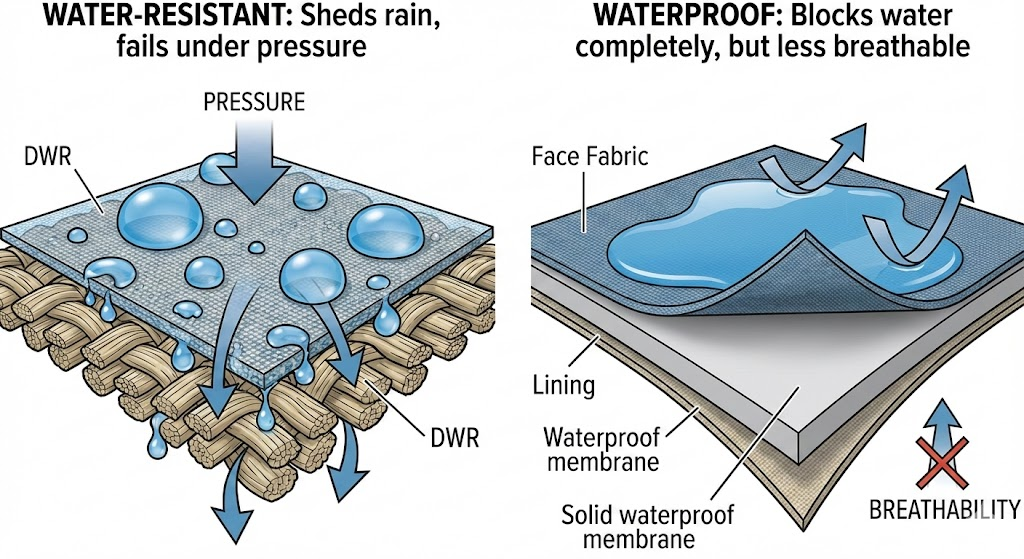
- Waterproof fabrics are tested with a hydrostatic head method: a column of water presses on the fabric until leakage occurs, and the height in millimeters is the rating. For outdoor garments, fabrics commonly target around 10,000 mm or more to qualify as “waterproof.”
- Water-resistant fabrics rely on tight weaves and durable water-repellent (DWR) finishes that make water bead and roll off, but they are not guaranteed to resist water under sustained or high pressure.
Water‑resistant is about shedding rain and delaying wetting, not about staying watertight when you sit, kneel, or stay out in all‑day storms.
If you need help comparing specific ratings like 10,000 mm vs 20,000 mm and how kneeling or sitting changes the pressure on fabric, that belongs in the more technical waterproof rating guide.
The DWR reality: why “waterproof” shells stop beading
Both waterproof and water‑resistant jackets typically use a surface DWR coating. It’s crucial because once the face fabric soaks, breathability drops and water can creep through stitching and micro‑defects.
Research on military raincoat fabrics and commercial technical jackets shows:
- A laminated fabric initially rated as highly waterproof lost a significant portion of its water repellency and hydrostatic resistance after 20 wash cycles, especially under harsh washing conditions.
- Care experiments on technical jackets found that all washing modes caused some functional degradation, but cooler water, shorter wash times, and mild detergents minimized the loss of water repellency and waterproof performance.
In other words:
- Your waterproof jacket will stop beading without proper care.
- Bad washing routines can downgrade a high‑end shell into “just water‑resistant” surprisingly quickly.
Pro Tip: Treat DWR maintenance as part of jacket ownership. A mid‑range waterproof shell with maintained DWR beats a high‑spec shell that’s been abused in the wash.
When water-resistant is enough (for most people)
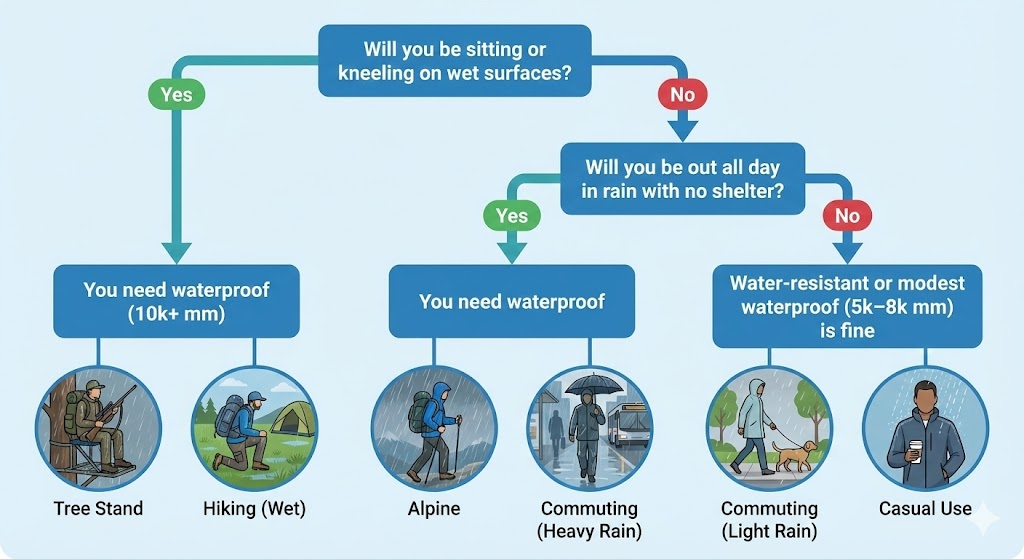
Most people are not guiding expeditions or working in nonstop rain. They commute, walk the dog, hike on weekends, and occasionally get caught out. For these use cases, water‑resistant or modestly rated waterproof jackets are usually sufficient.
Everyday and light outdoor use
- Examples: City commuting, school runs, bus stops, errands, urban walks.
- Exposure: Light to moderate rain for 20–60 minutes, frequent access to shelter.
- What you need:
- A water‑resistant shell with good DWR, or
- A waterproof jacket in the 5,000–8,000 mm range with a decent hood and hem.
Impactful factors here:
- Hood shape and brim (keeping water off your face).
- Length (covering hips vs ending at waist).
- Seam design and zippers.
Light hiking and fair‑weather backpacking
- Examples: Day hikes on marked trails, weekend trips in temperate climates.
- Exposure: Intermittent showers, changing cloud cover, usually not stuck out all day in solid rain.
- What you need:
In both cases, the ability to vent heat and moisture (pit zips, front zip, mesh pockets) will influence comfort more than the jump from “water-resistant” to “heavy waterproof.”
When you really do need waterproof
There are clear scenarios where water‑resistant is not a smart choice, because failure moves from “annoying” to “trip‑ending or dangerous.”
Sitting, kneeling, and working on wet surfaces
- Examples: Tree stand or blind hunting, bank fishing, construction, surveying, farm work.
- Exposure: Long periods sitting or kneeling on wet ground, platforms, or surfaces.
- Why water‑resistant fails: Localized pressure at knees, hips, and seat greatly exceeds simple rainfall; water is forced through fabric pores and seams.
- What you need: A true waterproof shell that has been tested to higher hydrostatic pressures and shows acceptable durability after multiple wash cycles.
All-day wet, no shelter
- Examples: Alpine routes, coastal trails, multi‑day trips in maritime climates, guiding or professional fieldwork.
- Exposure: Hours of continuous rain, wet snow, or spray with limited chance to dry out.
- What you need:
- A proper waterproof membrane shell (laminated or coated) designed for outdoor use, plus
- Evidence (from brand or testing) that its waterproof/repellent properties survive repeated laundering.
In these situations, the extra cost of a waterproof shell is justified, because water‑resistant will saturate, lose warmth, and can become unsafe in cold.
💰Save More with Our Discounts & Coupons!

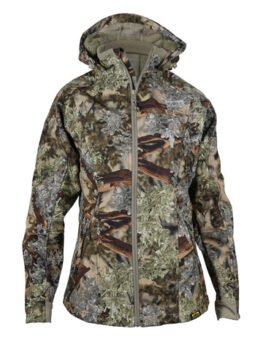
Dealibrium Take: Matching jacket to reality, not fear
Think in use cases, not labels. Here’s a distilled view:
| Scenario | Water-Resistant Enough? | Better with Waterproof? | Why |
|---|---|---|---|
| Urban commuting, errands | Yes | Only if climate is very wet | Short exposures, easy access to shelter |
| Dog walks, casual parks | Yes | Optional | Acceptable to get slightly damp sometimes |
| Day hikes, good forecast | Often | If forecast is sketchy | Water-resistant + packable umbrella often fine |
| Tree stand hunting, bank fishing | No | Yes | Prolonged contact with wet surfaces and gear |
| Multi-day alpine / coastal | No | Yes | Continuous wet, limited drying time |
| Outdoor labor in rain | Rarely | Yes | Exposure is long, drying breaks limited |
Dealibrium Take:
- If your reality is “I can usually duck under something,” water‑resistant or modest waterproof is appropriate.
- If your reality is “I must stay out and keep working/hunting/hiking in the wet,” waterproof becomes non‑negotiable.
Why overbuying waterproof is a waste (for most)
Research on coated and laminated outdoor fabrics highlights the constant trade-off between waterproofness and vapor permeability (breathability). Heavier coatings and tighter structures block more water—but also more sweat vapor.
Consequences of chasing maximum waterproofing when you don’t need it:
- Overheating and clamminess: Sweat accumulates under the shell because it cannot escape fast enough.
- Heavier and bulkier jackets: Extra layers and coatings add weight and stiffness.
- Higher price with diminishing real-world benefit: If you rarely face truly extreme conditions, the functional gain is marginal.
For most shoppers, 8,000–10,000 mm waterproof or even well‑designed water‑resistant jackets strike the right balance between cost, comfort, and protection—especially if cared for properly.
How care and maintenance change the equation
Care habits can downgrade or sustain performance:
- Military raincoat research: Even robust laminated fabrics lost waterproof efficiency after repeated wash cycles, but careful washing preserved functionality far better than harsh treatment.
- Technical jacket care study: identifying “optimal daily washing” parameters (moderate temperature, limited detergent, shorter cycles) minimized DWR and performance loss while keeping jackets clean enough.
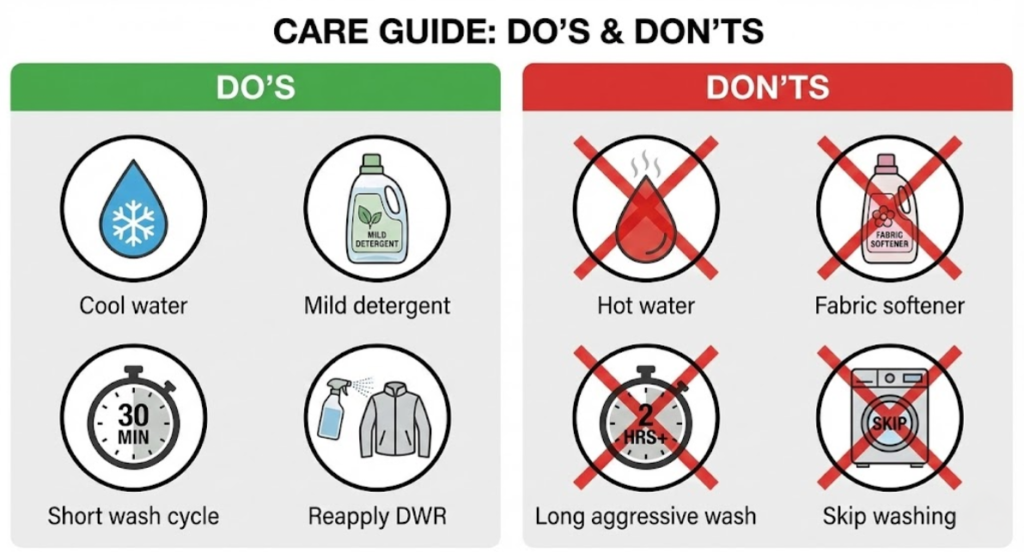
Simple rules:
- Wash only when necessary; wipe off mud and spot-clean first.
- Use mild or technical detergents; avoid softeners.
- Reapply DWR when water stops beading on the surface.
By following these, a mid‑range waterproof or water‑resistant jacket can stay effective for many seasons.
Frequently Asked Questions
Yes for many hikes, especially short ones or in mild climates. Combine good DWR, a reliable hood, and smart layering. For multi‑day or exposed trips with uncertain weather, a waterproof shell is safer.
No. It can restore beading and short-term performance but cannot change the underlying fabric’s hydrostatic head or seam construction. Think of it as “refreshing water‑resistant behavior,” not upgrading architecture.
Likely DWR wear and contaminated face fabric (oils, dirt). Once the face wets out, breathability drops and water can seep in at pressure points. Cleaning properly and restoring DWR often revives performance.
Only if your “just in case” scenarios are realistic. If 99% of your life is commuting and light hiking, a waterproof shell may be nice, but a high‑spec, expedition‑grade jacket is overkill. Buy for real conditions, not imagined extremes.
This article is about deciding between water-resistant and waterproof. For detailed rating breakdowns and how sitting or kneeling compares to rainfall pressures, see the dedicated technical guide on waterproof ratings.
Key Takeaways: Choose Enough Jacket, Not Maximum Jacket
- Water-resistant gear is enough for most urban, casual, and many hiking situations when combined with sensible layering and realistic expectations.
- Waterproof gear is vital when you can’t leave the wet—tree stands, field work, multi‑day alpine or maritime trips.
- Ratings and tech only matter as far as your actual life does. Overbuying for fear wastes money and often reduces comfort.
Match your jacket to your true exposure, not the marketing claims, and you’ll spend less, carry lighter, and still stay as dry as you realistically need.