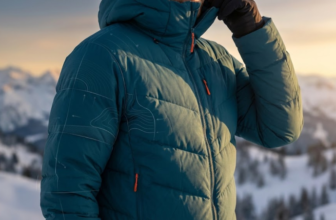
You bought a technical jacket in black because it looks professional and hides dirt. But then you’re hiking at 10,000 feet on a clear day, the sun is intense, and suddenly you’re overheating despite below-freezing air temperature. Meanwhile, your hiking partner in a light gray jacket stays comfortable. This isn’t luck—it’s solar physics. Fabric color determines how much solar radiation your jacket absorbs, which directly affects your internal temperature independent of ambient air temperature.
Most outdoor gear guides ignore this factor entirely, focusing only on insulation ratings and waterproofing. But alpine climbers and high-altitude hunters know: on clear days in mountains or snow-covered terrain, solar absorption matters as much as insulation. This article explains the science of color and solar heat gain, and shows you why jacket color is a critical but overlooked variable in thermal management.
The Physics of Solar Absorption – Why Black Absorbs and White Reflects
All fabrics absorb and reflect solar radiation differently based on color. This property is measured by albedo—the fraction of solar radiation reflected by a surface.
Key physics:
- White or light gray fabrics: High albedo (0.7–0.9), meaning 70–90% of solar radiation bounces away; only 10–30% is absorbed.
- Black or dark fabrics: Low albedo (0.05–0.3), meaning only 5–30% of solar radiation bounces away; 70–95% is absorbed and converted to heat.
- Mid-tone colors (tan, light brown, rust): Medium albedo (0.3–0.6), meaning 30–60% absorbed.
💰Save More with Our Discounts & Coupons!
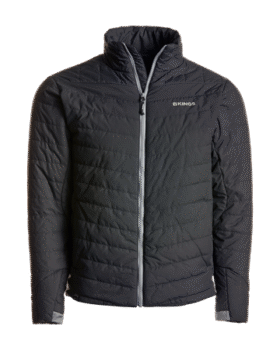
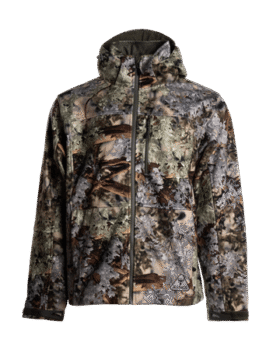
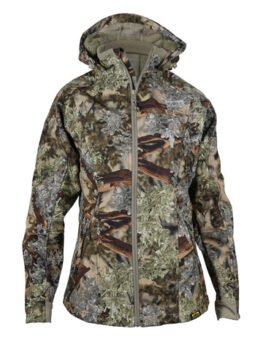
Why this matters for outdoor jackets:
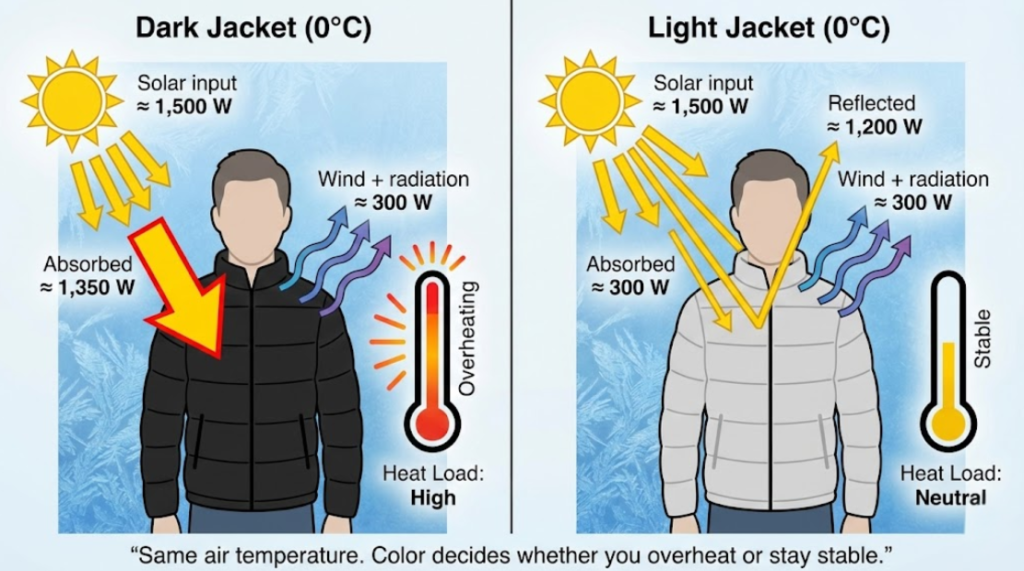
A typical sunny day delivers approximately 1,000 W/m² of solar radiation to Earth’s surface. For a jacket with 1.5 m² of exposed surface area (typical torso + sleeve area), that’s 1,500 watts of energy hitting your jacket.
If your jacket is black (10% albedo), you’re absorbing 1,350 watts of heat directly into your body. If it’s light gray (80% albedo), you’re absorbing only 300 watts. That’s a 1,050-watt difference—enough to raise your core body temperature by 1–2°C in as little as 10–15 minutes of static exposure to sun, depending on air temperature and insulation.
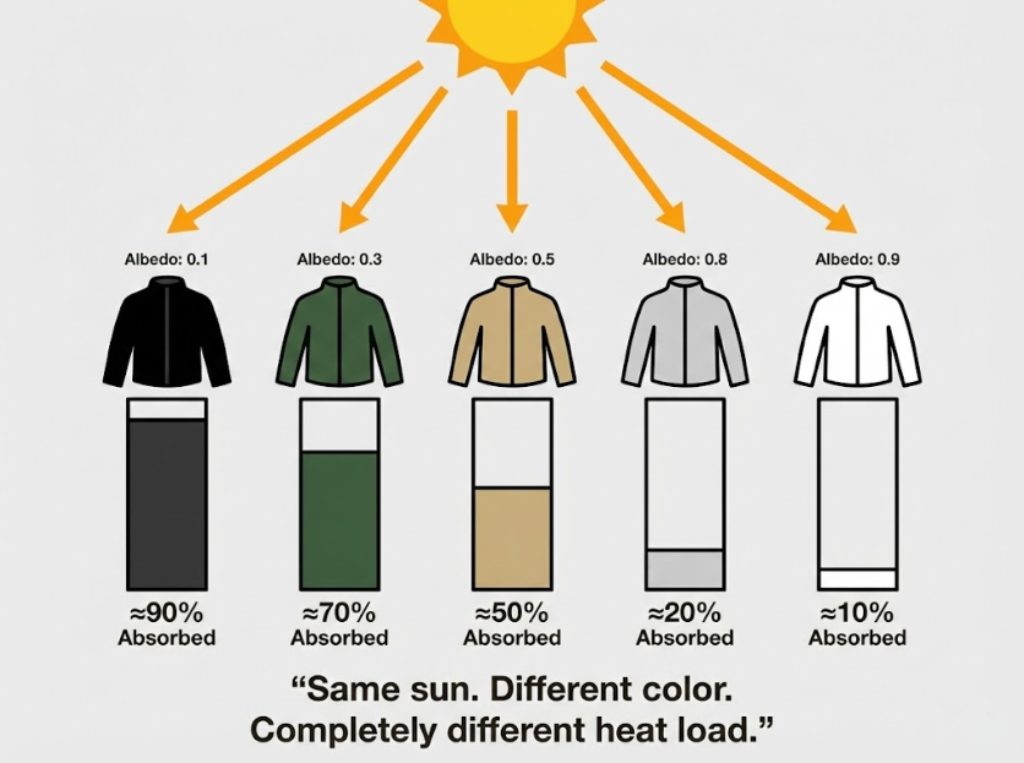
Pro Tip: On a clear day at altitude, jacket color can functionally increase your perceived temperature by 10–20°C compared to the air temperature. A 0°C morning feels like 15–20°C if you’re wearing a dark jacket and standing in direct sun.
Why Bright Sun Overheats You Even in Cold Air
The key misconception: Solar heat gain is independent of ambient air temperature. Your jacket color determines solar heating; the air temperature determines heat loss. On a clear, cold, high-altitude day, you can experience both simultaneously—intense solar heating and significant heat loss to wind and radiation.
The math:
- Solar heating: 1,050 watts (dark jacket in sun)
- Radiative cooling to sky: ~100 watts (when air is cold and dry)
- Convective cooling (10 km/h wind): ~200 watts
- Evaporative cooling (minimal, layers are dry): ~50 watts
- Net heat gain: 700 watts
Your body generates about 100 watts at rest. Add 700 watts from solar absorption, and you’re generating the equivalent metabolic heat of hard hiking while standing still. Overheating happens fast.
This is why:
- High-altitude mountaineers often overheat in direct sun despite below-freezing temperatures.
- Snow-covered terrain amplifies solar heating (fresh snow has 0.8–0.9 albedo, so solar radiation bounces off the ground and reflects onto your jacket again—essentially doubling exposure).
- Hunters on open ridges overheat on clear mornings despite cool air, causing them to sweat and then chill when they strip layers or sit still in shade.
The Hunting Scenario – Why Dark Camo Jackets Create a Sweat Problem
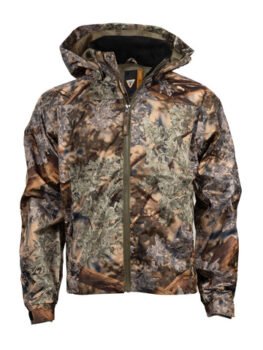
Bowhunters and rifle hunters face a specific dilemma: camouflage effectiveness vs. thermal comfort.
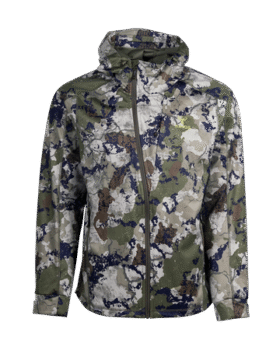
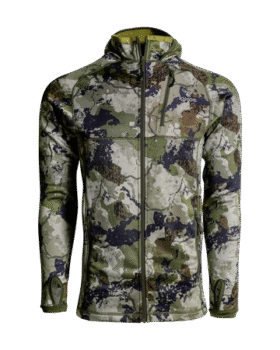
Dark camo (black, dark brown, forest green):
- Advantage: Blends well in shade and dense timber; excellent for stealth.
- Disadvantage: Absorbs ~80–90% of solar radiation. On a clear morning at 8,000 feet, even 25°F air feels like 40–45°F in direct sun.
- The problem: You start the hike in darkness/shade, feeling appropriate cold. As sun rises, solar heating intensifies. You sweat from overheating while hiking to your stand. By the time you reach your hunting position and sit still, you’re damp. Within 30 minutes of static sitting in shade with evaporative cooling, you’re dangerously cold—hypothermia risk despite insulation.
Light camo (tan, khaki, light brown):
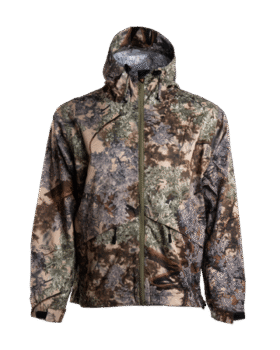
- Advantage: Absorbs only 40–60% of solar radiation; much more manageable heating during hikes.
- Disadvantage: Slightly less effective at blending in heavy shade or dark timber; may be compromised in certain environments.
- The benefit: You stay dry during the hike. You don’t overheat. You arrive at your stand comfortable, not damp. Evaporative cooling is less aggressive. You maintain core temperature better during static sitting.
💰Save More with Our Discounts & Coupons!

The optimal strategy for hunters:
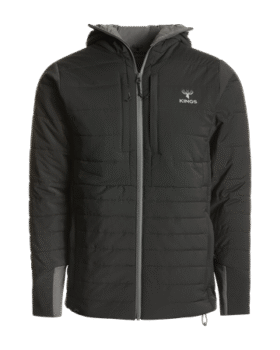
Many experienced hunters use a two-jacket system:
- Light-colored insulation jacket for the hike in (absorbs less solar radiation, minimizes sweat).
- Dark camo shell jacket worn over it at the stand (worn over dry layers, adds thermal mass, blends visually in final position).
This approach separates the heating/activity phase (hike) from the static phase (hunting), optimizing both.
Alpine and High-Altitude Applications – Sun Intensity Increases with Elevation
Solar radiation intensity increases approximately 10% per 1,000 meters of elevation gain because there’s less atmosphere to scatter and absorb radiation.
At sea level on a clear day: ~1,000 W/m²
At 3,000 meters (10,000 feet): ~1,300 W/m²
At 5,000 meters (16,000 feet): ~1,500 W/m²
This means:
- Alpine climbers (8,000–14,000 feet): Solar heating is 20–30% more intense than at sea level. Dark jackets become liabilities, not assets.
- Himalayan mountaineers (15,000+ feet): Solar heating is extreme; white or light-colored shells are almost mandatory despite visual “coolness” of black gear.
- Snow-covered peaks: Reflected radiation from snow nearly doubles solar heating (ground albedo 0.8–0.9 + jacket absorption creates a radiation sandwich).
Example scenario:
A climber on Mount Rainier (14,410 feet) on a clear day at −10°C air temperature wearing a black jacket experiences:
- Direct solar heating: 1,400 watts (1,300 W/m² × 1.5 m² × 10% absorption = effective heat)
- Ground reflection: Additional 200 watts (snow reflecting radiation back onto jacket)
- Net heating: Equivalent to 1,600 watts to the torso
- Air temperature still −10°C, but felt temperature: +10–15°C due to solar gain
Overheating and dehydration are real risks despite the objective cold.

The Dealibrium Take – Jacket Color as a Thermal Variable
| Climate / Season | Sky Condition | Recommended Jacket Color | Why | Activity Type |
|---|---|---|---|---|
| High altitude (8,000+ ft) | Clear, sunny | Light gray, white, pale tan | Minimizes solar absorption; prevents overheating during ascent | Climbing, high-altitude hiking |
| High altitude (8,000+ ft) | Overcast, cloudy | Dark color acceptable | No strong solar effect; insulation matters more | Climbing in clouds, storms |
| Snow-covered terrain | Clear, sunny | Light or white | Reflected radiation from snow doubles heating; light color essential | Alpine mountaineering, glacier travel |
| Forest / heavily shaded | Clear day | Dark color acceptable | Minimal solar penetration; blending matters more | Dense forest hiking, backcountry skiing in timber |
| Open alpine meadow | Clear day | Light color preferred | Full sun exposure; color dominates thermal comfort | Alpine hiking, tundra travel |
| Hunting (dawn/dusk activity) | Clear morning | Light camo for hike, dark for sitting position | Separate heating during activity from static cold exposure | Bowhunting, rifle hunting |
| Desert / arid high-altitude | Clear day | Light or white mandatory | Extreme solar intensity; dark jackets unsafe | Desert mountaineering, high-altitude desert hiking |
| Temperate mid-altitude | Mixed (partly cloudy) | Mid-tone (tan, khaki) acceptable | Provides balance; some solar absorption but not extreme; good camo | Standard 4-season hiking, multi-season outdoor work |
Dealibrium Buying Rule:
- If you spend significant time in direct sun above 8,000 feet or on snow: Buy light-colored (gray, white, tan) outer shells. Accept that you sacrifice some visual “coolness” for real thermal management.
- If your activity is shaded or forest-based: Dark camo is fine; solar color doesn’t matter if you’re not in direct sun.
- If you hunt at dawn/dusk on open terrain: Consider a two-jacket system (light hike jacket, dark stand jacket), or buy mid-tone camo that balances both needs.
- For alpine mountaineering or glacier travel: Light color is non-negotiable. Your safety depends on preventing overheating during ascent and managing moisture before static sitting at altitude.
💰Save More with Our Discounts & Coupons!

The Science Behind Sweat and Hypothermia – Why Overheating Leads to Freezing
This is critical: overheating from solar absorption, followed by evaporative cooling, creates the fastest path to hypothermia in cold environments.
The sequence:
- Hike to stand/camp in dark jacket in sun: Core temperature rises 0.5–1.5°C above normal due to solar heating + physical exertion. You sweat.
- Arrive and sit still in shade: Solar heating stops. Wind and evaporative cooling accelerate. Damp clothing loses insulation—down can lose 50% effectiveness when damp; synthetics lose 30%.
- Within 30–45 minutes: Core temperature drops below baseline. You’re now hypothermic despite insulation that would be adequate for dry conditions.
Real-world consequence:
A hunter who overheats hiking to a morning stand in a dark jacket (absorbing 1,200+ watts from solar radiation + exertion heat) arrives damp. He removes a layer to cool down. He sits still for 2 hours at 15°F. By mid-morning, he’s dangerously cold—core temperature 36–37°C (normal is 37°C). He’s too lethargic to move efficiently, fine motor control (critical for shooting) is degraded, and he’s at genuine frostbite risk in extremities.
A hunter who wears a light-colored jacket stays dry during the same hike. He arrives comfortable, doesn’t strip layers, and maintains thermal equilibrium despite sitting still for hours.
The takeaway: Jacket color directly impacts cold injury risk through the moisture pathway. Light color = dry = safer.
Frequently Asked Questions
No, not significantly. Cloud cover reduces solar radiation by 50–80%, making color nearly irrelevant. The exception: you’re in snow-covered terrain where ground reflection amplifies solar gain even through clouds.
Light gray (albedo 0.7–0.8) is nearly equivalent to white (0.85–0.95) for thermal purposes. Light gray is often more practical for outdoor work and hunting because it photographs as “normal” camo and blends better in mixed light than pure white. Choose whichever works for your environment.
Professional guides often wear dark for visibility (so clients can track them, so rescue teams can find them if needed) and for tradition. Many modern guides are shifting to lighter colors for alpine climbing. Visibility tradeoff is a deliberate choice—thermal science says light is better, but visibility and rescue potential matter too.
Reflective tape helps with safety visibility but doesn’t provide the distributed reflectance of fabric color. Tape covers maybe 2–5% of your jacket’s surface; fabric color covers 100%. If solar management is critical, swap the jacket color; tape is supplementary, not a substitute.
Color (albedo) matters far more than fabric type for solar absorption. A black nylon jacket and black wool jacket both absorb ~80% of solar radiation. However, fabric type affects how quickly that heat transfers into your body—thin, light shells transfer heat faster than thicker, denser fabrics. But color is the dominant variable.
Key Takeaways
Solar heat gain is a real, quantifiable thermal variable that most outdoor gear guides completely ignore.
- Dark jackets absorb 80–90% of solar radiation; light jackets reflect 70–80%: This creates a 1,000+ watt difference in heating on a sunny day—equivalent to 10–20°C of perceived temperature change.
- Solar heating is strongest at high altitude and on snow: Every 1,000 meters of elevation gain increases solar intensity ~10%. Fresh snow acts as a mirror, doubling solar exposure.
- Solar overheating causes sweat, which leads to hypothermia when you sit still: The most dangerous cold-weather injury sequence is overheating, sweating, then evaporative cooling in low temperature. Light jackets prevent this.
- Hunters should use a two-jacket strategy: Light-colored jacket for the hike (minimizes sweat), dark camo for sitting still (blends, worn over dry base layers).
- Alpine and high-altitude mountaineers should prioritize light colors: White or light gray shells are safety equipment above 8,000 feet, not a style preference.
- Overcast conditions change the equation: Cloud cover reduces solar effect by 50–80%, making jacket color largely irrelevant on cloudy days.
- Jacket color is an underrated variable in cold injury prevention: Choosing dark when light is appropriate increases hypothermia risk more than most people realize.
Your jacket color determines how hot you get before you get cold—and that sequence is the difference between a safe outing and a dangerous one.