Have you ever needed to find a faulty wire in a wall, spot a coolant leak in an engine bay, or track game in the pitch-dark woods? Your standard smartphone is blind to the invisible world of heat. But what if your phone could see temperature?
That’s the superpower offered by thermal imaging rugged phones. Once a niche technology reserved for military applications, brands like Ulefone have integrated powerful thermal sensors from FLIR and ThermoVue directly into their devices. This innovation has democratized thermal imaging, making it an essential tool for electricians, mechanics, hunters, and even savvy homeowners.
This guide will break down the best Ulefone thermal and night vision phones available on Dealibrium. We will explain the core technology, review the top models for every budget, and show you exactly how to leverage this incredible feature in your daily life.
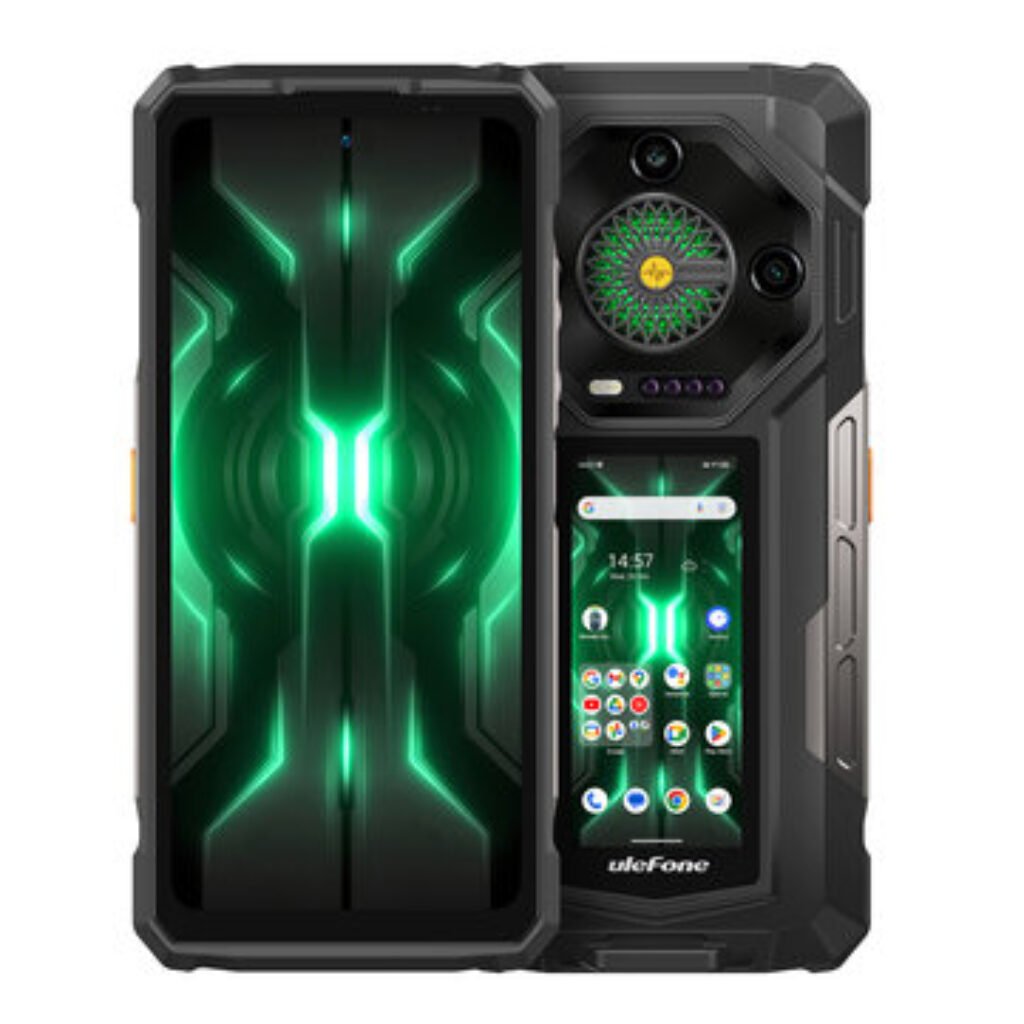
What Is Thermal Imaging and How Does It Work?
At its core, thermal imaging—also known as infrared thermography—visualizes heat energy that is invisible to the naked eye. Everything that has a temperature above absolute zero emits infrared radiation.
A special sensor inside the phone, called a microbolometer, captures this radiation and translates it into a visual image called a thermogram. Unlike a normal camera that needs light, a thermal camera works in complete darkness, smoke, and fog, making it an incredibly versatile tool. Colors on the screen represent different temperatures: typically, blue and purple show colder spots, while red, orange, and yellow indicate heat.
Real-World Uses: Why You Need a Thermal Phone
A thermal phone isn’t just a gadget; it’s a diagnostic tool that can save you thousands of dollars and countless hours.
- For Home & Construction: Instantly find missing insulation, drafts around windows, hidden moisture from leaky pipes, and overloaded electrical circuits before they become a fire hazard.
- For Automotive Repair: Diagnose engine misfires by spotting a colder exhaust manifold, identify a failing catalytic converter, or check for blockages in a radiator.
- For Hunting & Outdoors: Safely navigate in total darkness, recover downed game by tracking its heat signature, and spot wildlife hiding in dense brush.
- For Security & Surveillance: Thermal cameras are used by law enforcement and rescue teams to detect intruders or find victims in low-visibility conditions. A person’s body heat makes them shine like a beacon, even if they’re hidden.
To make your decision easier, here’s a side-by-side comparison of the key specifications for our top picks. Pay close attention to the Thermal Resolution and Refresh Rate, as these are the most important factors for image quality.
| Model | Thermal Sensor | Thermal Resolution | Refresh Rate | Connectivity | Battery |
| Armor 28 Ultra | ThermoVue T2 | 640 x 512 | 25Hz | 5G | 10,600mAh |
| Armor 27T Pro | FLIR Lepton 3.5 | 160 x 120 | 9Hz | 5G | 10,600mAh |
| Armor 27T | FLIR Lepton 3.5 | 160 x 120 | 9Hz | 4G | 10,600mAh |
| Armor 25T Pro | ThermoVue | 160 x 120 | 25Hz | 5G | 6,500mAh |
| Armor 25T | ThermoVue | 160 x 120 | 25Hz | 4G | 6,500mAh |
| Mini 20T Pro | FLIR Lepton | 160 x 120 | 25Hz | 5G | 6,200mAh |
| Armor Pad 4 Ultra | ThermoVue | High-Resolution | 25Hz | 5G | 11,800mAh |
1. The Flagship Powerhouse: Ulefone Armor 28 Ultra (Thermal)
Best For: Users who demand the highest resolution and performance.
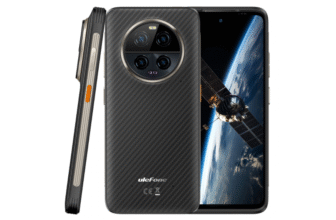
The Armor 28 Ultra is a mobile workstation disguised as a phone. It’s built around the cutting-edge ThermoVue T2 sensor, which delivers a staggering 640×512 thermal resolution. This isn’t just an upgrade; it’s a generational leap, providing near-photographic thermal detail. Paired with a top-tier Dimensity 9300+ processor and a massive 1TB of storage, this device is faster than many laptops and will never run out of space.
Key Specs:
- Thermal Sensor: ThermoVue T2 (640×512 Resolution / 25Hz Refresh Rate)
- Night Vision: 64MP Camera
- Battery: 10,600mAh with blazing-fast 120W Charging
- Unique Feature: Dual AMOLED Displays (a small one on the back for notifications)
From Experience: The 25Hz refresh rate is a game-changer. When scanning a moving herd or a running engine, the image is fluid and clear, unlike the choppy 9Hz sensors found on older or cheaper devices.
2. The Professional’s Workhorse: Armor 27T Pro (5G) & Armor 27T (4G)
Best For: Electricians and HVAC pros who need proven FLIR accuracy.
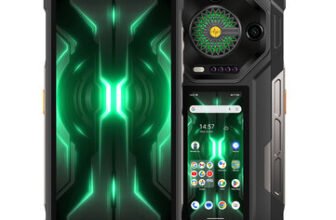
This series is built for professionals who trust the FLIR ecosystem. Both models feature the legendary FLIR Lepton 3.5 sensor with MSX® technology, which overlays visual details onto the thermal map for clearer analysis. The primary difference is the processor and network connectivity.
- Ulefone Armor 27T Pro (5G): This is the premium version, powered by a Dimensity 6300 5G chipset. Choose this model if you need to quickly upload reports from the field or want a more future-proof device.
- Ulefone Armor 27T (4G): This model offers the exact same professional-grade FLIR thermal camera but uses the reliable Helio G99 4G processor. It’s the perfect choice if you work in areas without 5G coverage or want to save money without sacrificing thermal quality.
Pro Tip: For most diagnostic work, 4G is more than sufficient. Choosing the standard Armor 27T is a smart way to get pro-level thermal imaging at a lower cost.
3. The Slim & Affordable Duo: Armor 25T Pro (5G) & Armor 25T (4G)
Best For: Budget-conscious users who want a slim, modern rugged phone.

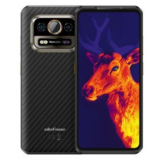
The Armor 25T series is for those who want thermal capabilities without the extreme bulk of other rugged phones. At just 12.5mm thick, they feel more like a standard smartphone but can still survive drops and water submersion. Both models use a high-quality ThermoVue sensor with a fluid 25Hz refresh rate.
- Ulefone Armor 25T Pro (5G): The Pro model gives you the speed of 5G with the Dimensity 6300 chipset, perfect for streaming and fast downloads.
- Ulefone Armor 25T (4G): Like its sibling in the 27 series, the standard 25T provides the same great thermal performance and design but sticks to a 4G Helio G99 processor to offer a more attractive price point.
4. The Compact Adventurer: Ulefone Armor Mini 20T Pro
Best For: Hikers, campers, and anyone who values portability.
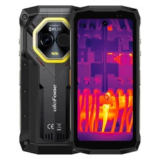
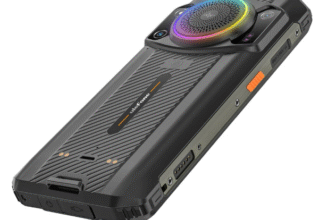
Rugged phones are often bulky. The Armor Mini 20T Pro is the exception. It packs a full FLIR thermal camera and a powerful 5G chipset into a compact body with a 4.7-inch screen that’s perfect for one-handed use. Its standout feature is the massive 500-lumen LED panel on the back, which functions as a brilliant work light, a campsite lantern, or an emergency SOS beacon.
Key Specs:
- Size: Compact 4.7-inch display
- Special Feature: Integrated 5W, 500-Lumen Versatile Light
- Thermal Sensor: FLIR Thermal Imaging
- Battery: 6200mAh (excellent for its size)
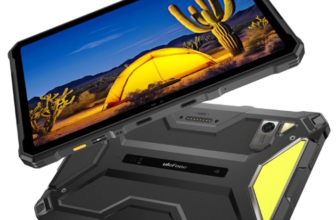
5. The All-Rounder Tablet: Ulefone Armor Pad 4 Ultra (Thermal)
Best For: Site managers, mechanics, and diagnostic professionals.
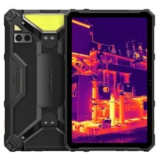
A phone screen can feel cramped when you’re analyzing complex heat maps. The Armor Pad 4 Ultra solves this with its large 10.36-inch 2K display. This rugged tablet is designed to survive drops on a construction site while providing a huge canvas for thermal analysis. It’s the perfect tool for showing clients proof of a problem or for reviewing schematics on the go.
Key Specs:
- Screen: 10.36-inch 2K (2000×1200)
- Battery: A colossal 11,800mAh
- Audio: Loud stereo speakers for noisy work environments
- Thermal Sensor: ThermoVue High-Resolution Sensor
Advantages and Disadvantages of Smartphone Thermal Imaging
While incredibly useful, it’s important to understand the trade-offs.
Advantages:
- Cost-Effective: Integrating thermal into a phone you already carry is far cheaper than buying a separate, dedicated thermal camera.
- Extreme Portability: Your diagnostic tool is always in your pocket, ready for inspections on the go.
- Real-Time Analysis: Instantly visualize heat variations and share images or reports directly from your phone.
Disadvantages:
- Accuracy Limitations: While great for diagnostics, they may not meet the stringent precision required for clinical medical use.
- Inability to See Through Walls: Thermal cameras cannot see through walls. They detect the surface temperature of the wall itself, which can reveal a hot pipe or missing insulation behind it, but they don’t provide an X-ray view.
Frequently Asked Questions (FAQ)
Thermal imaging detects heat and displays it as a color map; it works in any condition. Night vision amplifies tiny amounts of visible light (or uses an infrared illuminator) to create a clear, detailed image in black and white. Many Ulefone models, like the Armor 28 Ultra, include both technologies.
No. Glass and water both block long-wave infrared radiation, so a thermal camera cannot see through them. If you point it at a window, you’ll see the heat of the glass itself.
For basic tasks like finding drafts, no. However, interpreting complex images for industrial or electrical diagnostics requires some experience. The MSX feature on FLIR-equipped phones helps shorten this learning curve significantly.
Yes. Thermal imagers are passive devices. They do not emit any radiation; they only receive and measure the infrared energy that objects naturally give off.
Final Verdict
Choosing the right thermal phone depends entirely on your needs.
- For the absolute best resolution: The Ulefone Armor 28 Ultra is unmatched.
- For professional FLIR accuracy: The Armor 27T Pro (5G) is the top choice, while the Armor 27T (4G) offers the same power for less.
- For a slim design with a great sensor: The Armor 25T Pro (5G) is a fantastic all-rounder, with the Armor 25T (4G) providing an even better value.
- For portability: The Armor Mini 20T Pro is the clear winner.
By investing in one of these devices, you’re not just buying a phone—you’re adding an entirely new sense to your toolkit.